
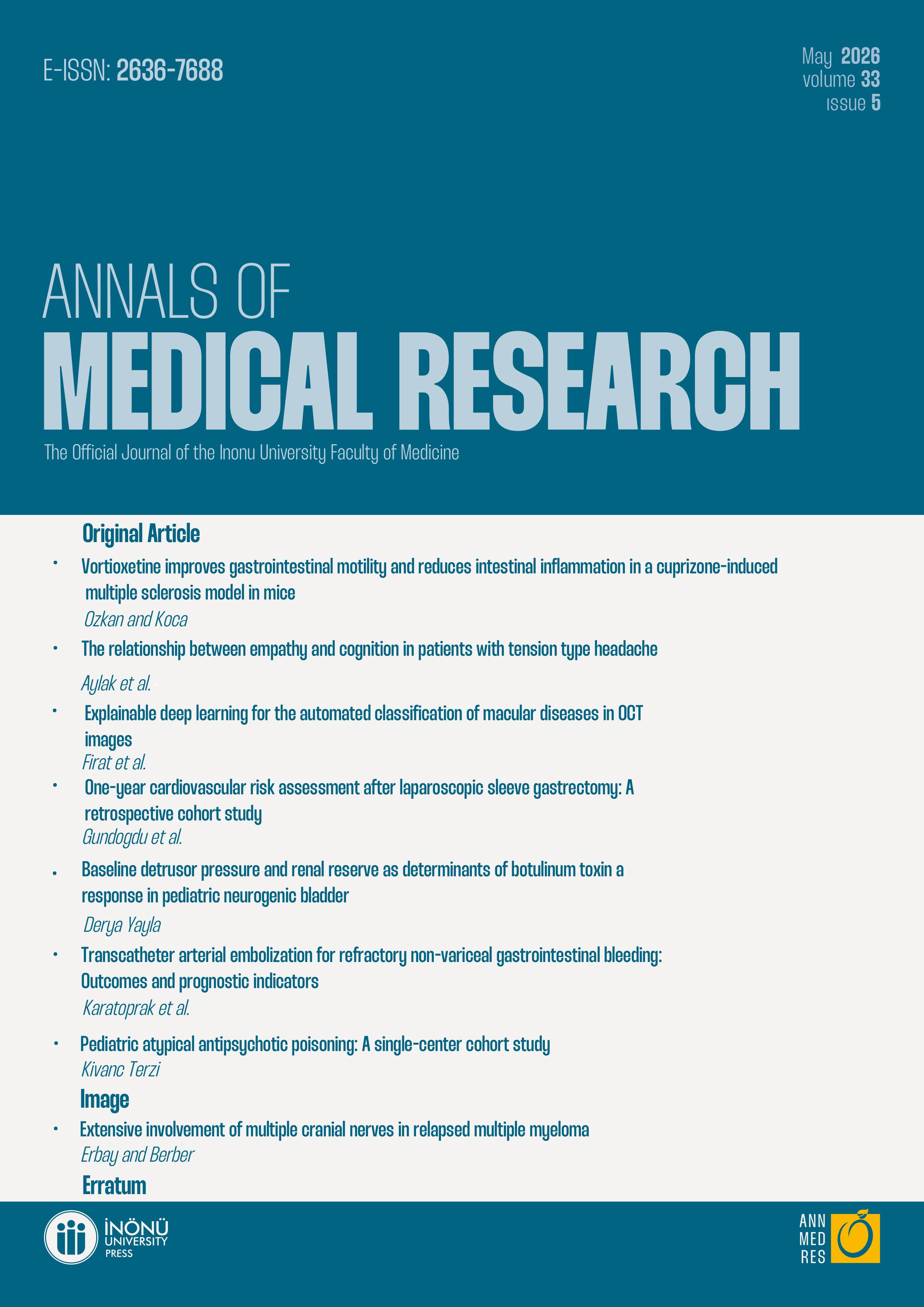
Transcatheter arterial embolization for refractory non-variceal gastrointestinal bleeding: Outcomes and prognostic indicators
Article Sidebar
Main Article Content
Abstract
Aim: Transcatheter arterial embolization (TAE) is increasingly used as second-line therapy for non-variceal gastrointestinal bleeding (NVGIB) when endoscopic hemostasis fails. This study investigated factors influencing rebleeding, mortality, and length of hospital stay (LOS) following TAE.
Materials and Methods: We retrospectively analyzed 50 patients (mean age 64.8 years; 72% male) who underwent TAE for acute NVGIB between April 2023 and April 2025. Demographic variables, comorbidities, laboratory values, endoscopic/angiographic findings, embolic materials, and outcomes were reviewed. Primary outcomes were rebleeding and in-hospital mortality; secondary outcomes were LOS and overall mortality.
Results: Technical success was 97.9%. Rebleeding occurred in 30% (15/50) of cases, predominantly within the first week. Risk was higher with malignancy (45.5%), systemic disease or bleeding disorders (29.4%), multivessel embolization (66.7% vs. 21.1%), and negative endoscopic findings (75% vs. 25.6%) (all p < 0.05). In-hospital mortality was 32% (16/50) and was associated with higher Rockall scores (p = 0.001) and lower platelet counts (p = 0.037). Overall mortality reached 52% (26/50) at a median follow-up of 16 months and was significantly associated with elevated INR (p = 0.005) and Rockall score (p = 0.032). Among survivors, mean LOS was 15.5 days and was correlated with comorbidity burden, transfusion requirements, and delayed embolization; lower baseline hemoglobin predicted longer stays. Complications occurred in 6% of patients: two minor access-site hematomas and one ischemic event.
Conclusion: TAE is a safe and effective treatment for NVGIB that is refractory to endoscopic therapy and is associated with high technical success and low complication rates. Mortality and rebleeding are primarily influenced by comorbidities, disease severity, and procedural complexity rather than by embolic technique, emphasizing the importance of individualized risk assessment and multidisciplinary management.
Downloads
Article Details
Section

This work is licensed under a Creative Commons Attribution-NonCommercial-NoDerivatives 4.0 International License.
CC Attribution-NonCommercial-NoDerivatives 4.0